 Spanish
 English
 French
 German
 Portuguese
 Dutch
 Italian
 Russian
 Chinese
 Japanese
 Korean
 Indonesian
 Thai
 Vietnamese
 Arabic
 Turkish
 Hebrew
 Hindi
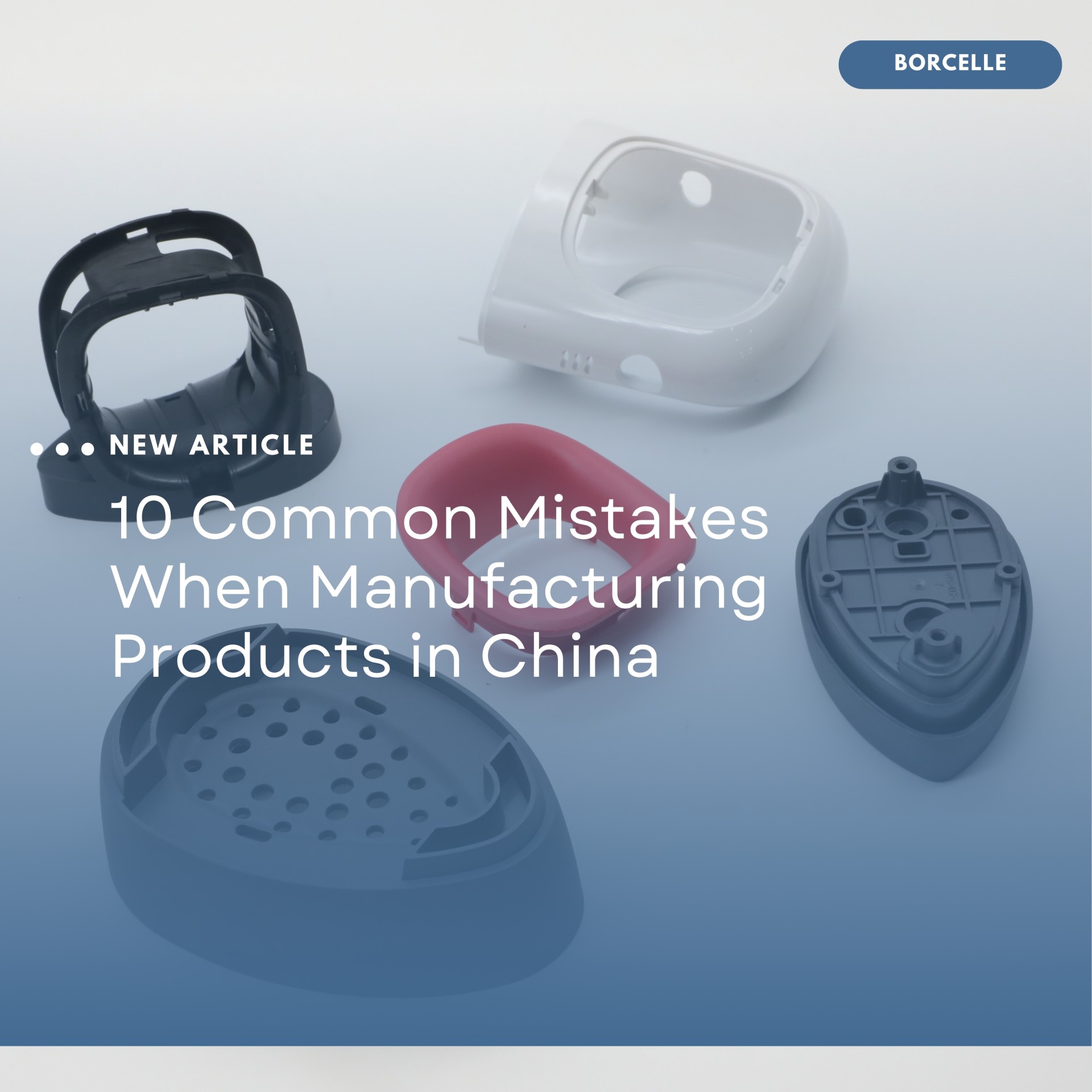
Summary: For Design Companies , when you subcontract your work to Chinese manufacturing suppliers often lies not in finding a factory that can provide a quote, but in transforming an immature product into a commodity suitable for stable, mass production. This article outlines 10 common mistakes—covering product development, engineering, and project management—that occur during the transition from rapid prototyping to small-batch production, along with strategies to prevent them.
China possesses a mature and diverse manufacturing supply chain; however, an abundance of supply-chain resources does not automatically guarantee a smooth transition to mass production. Many projects end up exceeding budgets or facing delivery delays—not necessarily due to a lack of capability among suppliers, but because the technical requirements and management protocols were not fully prepared before the product entered the manufacturing phase.
- Rushing to initiate mold fabrication before the product design is finalized
The fact that a prototype functions correctly does not mean it is ready for mass production. Factors such as wall thickness, draft angles, ribs, parting lines, gate locations, and ejector pin positions can all impact the product’s structural integrity and molding stability.
Before commencing the manufacture of an injection mold, it is essential to conduct functional verification and DFM (Design for Manufacturing) analysis. This helps to proactively identify potential risks—such as sink marks, warpage, gas entrapment, weld lines, or difficulties during part ejection. Modifying a design before the mold is built is generally far more time- and cost-efficient than attempting to alter the mold after it has been completed.
- Provision of 3D Models Only
3D models typically convey only geometric shapes; they cannot fully specify dimensional tolerances, material grades, surface treatments, colors, textures, or testing requirements.
In addition to 3D files, 2D drawings, key quality characteristics, and assembly requirements must also be provided. For appearance standards that cannot be adequately described via drawings, physical samples, color swatches, or limit samples (defining acceptable defect thresholds) may be used for verification.
- Selecting only the supplier with the lowest quote
Price ranges can vary significantly between different suppliers. It is essential to clarify whether a quote includes costs for mold trials, samples, basic mold modifications, inspection fixtures, packaging, surface treatments, or transportation.
When comparing quotes, ensure that factors such as materials, mold lifespan, number of cavities, frequency of mold trials, inspection requirements, and responsibility for modifications are all taken into account. A truly meaningful price comparison must be based on identical technical standards and scopes of delivery.
- Skipping Prototyping and Small-Batch Validation
To lower the unit cost, some companies order thousands of units for their very first production run. This effectively multiplies any as-yet-undiscovered issues.
A safer approach involves: validating the structure and functionality through rapid prototyping, confirming engineering samples, and then proceeding to small-batch production. This trial production phase serves not only to inspect individual parts but also to verify assembly efficiency, packaging methods, and real-world performance.
- Lack of Defined Quality Standards
Terms like “good appearance” or “accurate dimensions” cannot serve as objective criteria for acceptance. Before a project begins, it is essential to clearly define key dimensions, tolerances, specific areas for visual inspection, permissible defects, acceptable color variation ranges, functional testing protocols, and packaging requirements.
While AQL (Acceptable Quality Limit) can be used for general batch sampling, items related to safety, regulatory compliance, or critical functionality require separate, more stringent quality control measures; these cannot rely solely on sampling-based inspection.
- Lack of Version Control for Design Changes
Modifications are a normal part of the product development process; however, it is essential that the supplier, procurement team, and engineering team all work from the same, current, and valid version.
Every change must be documented, including the version number, effective date, details of the modification, affected parts, and the person who authorized the change. Prior to the start of formal production, both parties must jointly confirm the final drawings, Bill of Materials (BOM), and inspection standards to ensure that obsolete documents do not reach the production floor. Furthermore, before mold manufacturing begins, it is critical to verify once more with the supplier that the drawings they are using are indeed the latest versions, thereby preventing significant errors.
- Material Requirements Are Too Vague
Simply specifying “ABS,” “aluminum alloy,” or “stainless steel” is usually insufficient. Different grades of the same material can vary significantly in terms of strength, heat resistance, flame retardancy, corrosion resistance, and processability.
For critical components, you should specify the exact material grade, applicable standards, and any required documentation. If a product is intended for medical use, food contact, outdoor environments, or requires flame retardancy, you must also verify compliance with relevant regulations and testing standards.
If you lack specific information, consult with your supplier. At SPM, many of our clients reach out to us early in the process to ask questions—covering topics such as material recommendations, DFM (Design for Manufacturing) analysis, and post-processing techniques.
- Underestimating the complexity of coordinating multiple manufacturing processes
A single product may involve plastic injection molding, CNC machining, sheet metal fabrication, surface finishing, electronic components, and final assembly. Even if a single supplier acts as the primary point of contact, the actual production may be distributed across multiple facilities.
It is essential to proactively address technical coordination—covering material requirements, dimensional fit, color consistency, and final assembly—well in advance. Choosing a good supplier like SPM, we have rich experience and ability to intergrate supply chain to save your energy and time.
- Neglecting Intellectual Property and Mold Ownership
A non-disclosure agreement (NDA) is merely the foundation. Contracts should also explicitly define the ownership of drawings, processes, molds, inspection gauges, and specialized tooling, while stipulating that the supplier is prohibited from reproducing, displaying, or using these items for other clients.
Typically, SPM signs an NDA or an NNN (Non-Disclosure, Non-Use, Non-Circumvention) agreement with new clients to provide them with peace of mind. Furthermore, SPM consistently adheres to a strict policy of protecting client intellectual property (IP) internally.
Regarding molds, it is also advisable to reach a prior agreement concerning their storage, maintenance, repair, and conditions for transfer.
- Don’t Just Look at the Ex-Factory Price
True cost encompasses far more than the unit price of a product; it also includes expenses related to packaging, inspection, shipping, tariffs, loss rate, and after service.
A supplier offering a slightly higher price—but providing seamless communication and consistent quality—may ultimately result in a lower total cost. Therefore, when selecting a manufacturing supplier in China, it is essential to evaluate their engineering support, responsiveness to issues, quality stability, and delivery capabilities.
Finally, having a patient and highly cooperative supplier is crucial. At SPM, for instance, while our core business lies in mold making, injection molding, and CNC machining, we also provide various other engineering and outsourcing services. This flexibility, reliability, and patient, collaborative approach ensure that projects are completed successfully.